 Binary Cipher
Choose latency from the decision.
Match batch, streaming, edge, composition, and destination patterns to the actual business SLA and profile availability.

The Audience Activation Operator Academy.
Master the full operating system—from ingestion, identity, profile, and audience evaluation to governance, destinations, activation, edge delivery, APIs, monitoring, and recovery. Then pressure-test the design in an interactive activation-contract workbench.
One-time purchase · permanent offline edition · hosted 1.x updates
The pack trains the design choices and operating evidence behind reliable customer activation—not just the clicks required to configure it.
Match batch, streaming, edge, composition, and destination patterns to the actual business SLA and profile availability.
Follow source, schema, identity, profile, merge policy, audience, governance, mapping, and schedule as one contract.
Separate expected count differences from qualification, suppression, mapping, export, and destination failures.
Assign owners, document residual risk, monitor the first export, and rehearse disable, rollback, and customer-impact response.
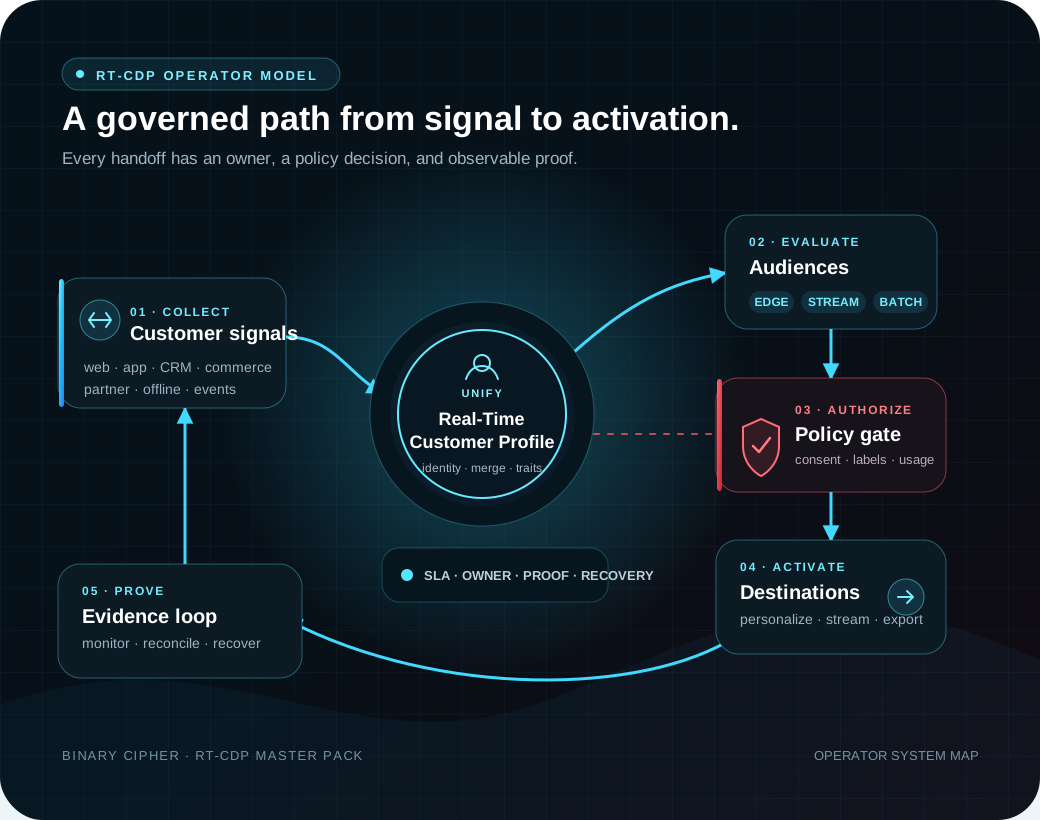
Use the field notes to remember the dependency order, the sticky board to review readiness, and the system map to trace data from signal to measurable activation.
Name the action the destination will take, the people it affects, and the latency the use case actually needs.
Confirm source grain, schema meaning, timestamps, identity fields, and ingestion behavior before enabling data for profile.
Namespaces, primary identities, linking rules, and merge policies must produce explainable profiles before audience logic is trusted.
Batch, streaming, and edge evaluation solve different timing problems. Destination delivery has its own clock too.
Evaluate labels, marketing actions, consent, suppression, and export identities before mapping attributes to a destination.
Compare qualified, activated, accepted, and acted-on counts. A successful dataflow run is not the same as business success.
If the team cannot explain why one profile qualified and what the destination received, the activation contract is incomplete.
Best for: learning the RT-CDP dependency chain and diagnosing count differences without guessing.
Record grain, schema, timestamp, ingestion mode, quality rules, and the source owner.
Review namespaces, primary identities, graph links, merge policy, and collapse risk.
Name the rule, evaluation method, exclusions, refresh cadence, and sample profiles.
Test labels, marketing actions, consent, suppression, privacy, and access boundaries.
Verify export identity, attributes, hashing, schedule, mapping, and destination acceptance.
Assign reconciliation, alerts, disable ownership, recovery steps, and downstream measurement.
Best for: activation design reviews. Each note needs an accountable owner and production evidence.
Read left to right. Troubleshoot the first handoff where counts, identity, policy, payload, or timing stop matching the agreed contract.
Best for: architecture reviews, audience-count diagnosis, and clarifying ownership across data, identity, activation, and measurement teams.
RT-CDP field notes selected.
Source quality shapes profile quality. Profile quality shapes audience membership. Governance changes what may leave. Destination evidence feeds the next design decision.
Follow the dependency path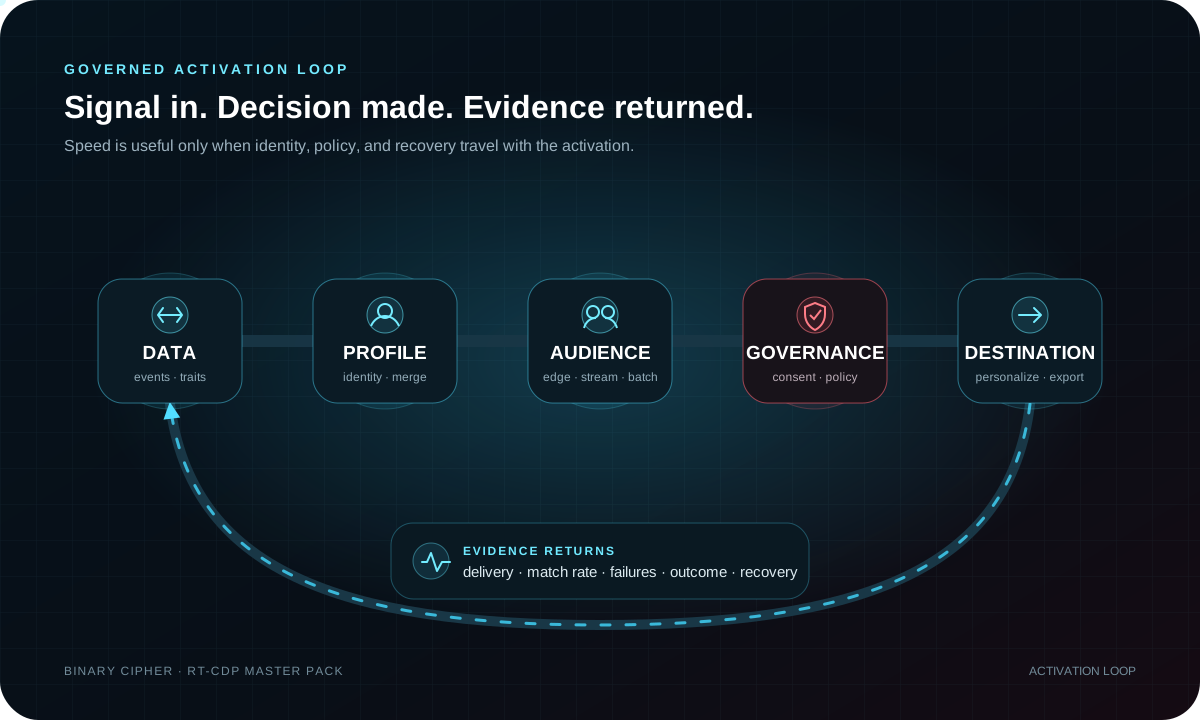
The durable curriculum stays stable while the source trail flags availability, entitlement, regional, and beta boundaries.
Unique namespaces, namespace priorities, graph simulation, and collapse prevention belong in identity design—not merge-policy logic.
Compose and enrich audiences against warehouse-resident data without copying the underlying warehouse dataset into Platform.
Prospect workflows and partner-to-partner discovery, activation, and measurement are taught with availability checks at the point of design.
Read-only audience, destination, source, identity, and profile triage—never represented as a create, update, activation, or deletion surface.
Filter by the work you own. Every module is designed around a concept map, operator guide, implementation checklist, lab, failure patterns, interview reasoning, and maintained official references.
Place Real-Time CDP on the Experience Platform foundation and separate AEP services, RT-CDP applications, entitlements, editions, and deployment patterns.
Translate acquisition, enrichment, personalization, retention, suppression, and off-site activation goals into decision, latency, evidence, and ownership contracts.
Operate sandboxes, roles, permissions, attribute-based access, packages, playbooks, promotion boundaries, and production change evidence.
Model record and time-series data, classes, field groups, data types, identities, descriptors, relationships, B2B objects, evolution, and union schemas.
Design SDK, Edge Network, source connector, batch, streaming, Data Prep, dataflow, partial-ingestion, and validation contracts.
Separate lake, profile, and identity stores; operate datasets, Catalog, Query Service, Data Distiller audiences, quality checks, retention, TTL, deletion, and dataset export.
Model namespaces, primary identities, identityMap behavior, graph linking, collapse risk, unique namespaces, priorities, simulation, and remediation.
Reason about fragments, merged views, profile enablement, dataset precedence, timestamp ordering, merge policies, edge profiles, computed attributes, and profile APIs.
Choose Segment Builder, Audience Composition, federated composition, Data Distiller, or imported audiences and the correct batch, streaming, edge, or flexible evaluation behavior.
Separate labels, marketing actions, governance policies, consent policies, Privacy Service operations, access control, security, and audit evidence.
Choose connection, extension, dataset, profile, streaming-audience, enterprise-streaming, or edge patterns; then configure identity, attributes, schedules, mappings, exports, and lifecycle evidence.
Reconcile profile, audience, and destination counts; inspect dataflows and runs; use alerts, dashboards, license usage, guardrails, health checks, job schedules, and recovery runbooks.
Connect people, leads, accounts, opportunities, relationships, account audiences, related accounts, lead-to-account matching, and predictive lead or account scoring.
Use Partner ID, prospect profiles and audiences, cookieless acquisition, Federated Audience Composition, and RT-CDP Collaboration with entitlement and region boundaries made explicit.
Apply lookalike and Customer AI signals, AI Assistant validation, Use Case Playbooks, API authentication, automation, ingestion/profile/segmentation APIs, SDKs, and read-only MCP triage responsibly.
A purchase event lands with a governed identity. Profile and merge behavior update, the customer exits a prospect audience, and the suppression audience qualifies at the required cadence. The destination receives the mapped identity, confirms the export, and operations reconcile membership, payload, and platform delivery without treating every count difference as a defect.
Pressure-test this contractConfigure the use case and run a deterministic readiness review. The workbench checks both individual controls and cross-contract compatibility. It sends nothing to a server.
You will get a scored verdict, compatibility check, and prioritized evidence list.
The validated 1.0 release supports learning, implementation planning, interview preparation, launch review, and incident response. The counts below match the completed downloadable and hosted academy.
Beginner-to-advanced guides organized around production dependencies.
Audience, identity, governance, mapping, activation, and debugging scenarios.
Audience briefs, activation contracts, QA checks, runbooks, and evidence logs.
Scenario answers that test reasoning across product and team boundaries.
Domain-weighted review with explanations and official-source follow-through.
A deterministic simulator for design reviews and stakeholder walkthroughs.
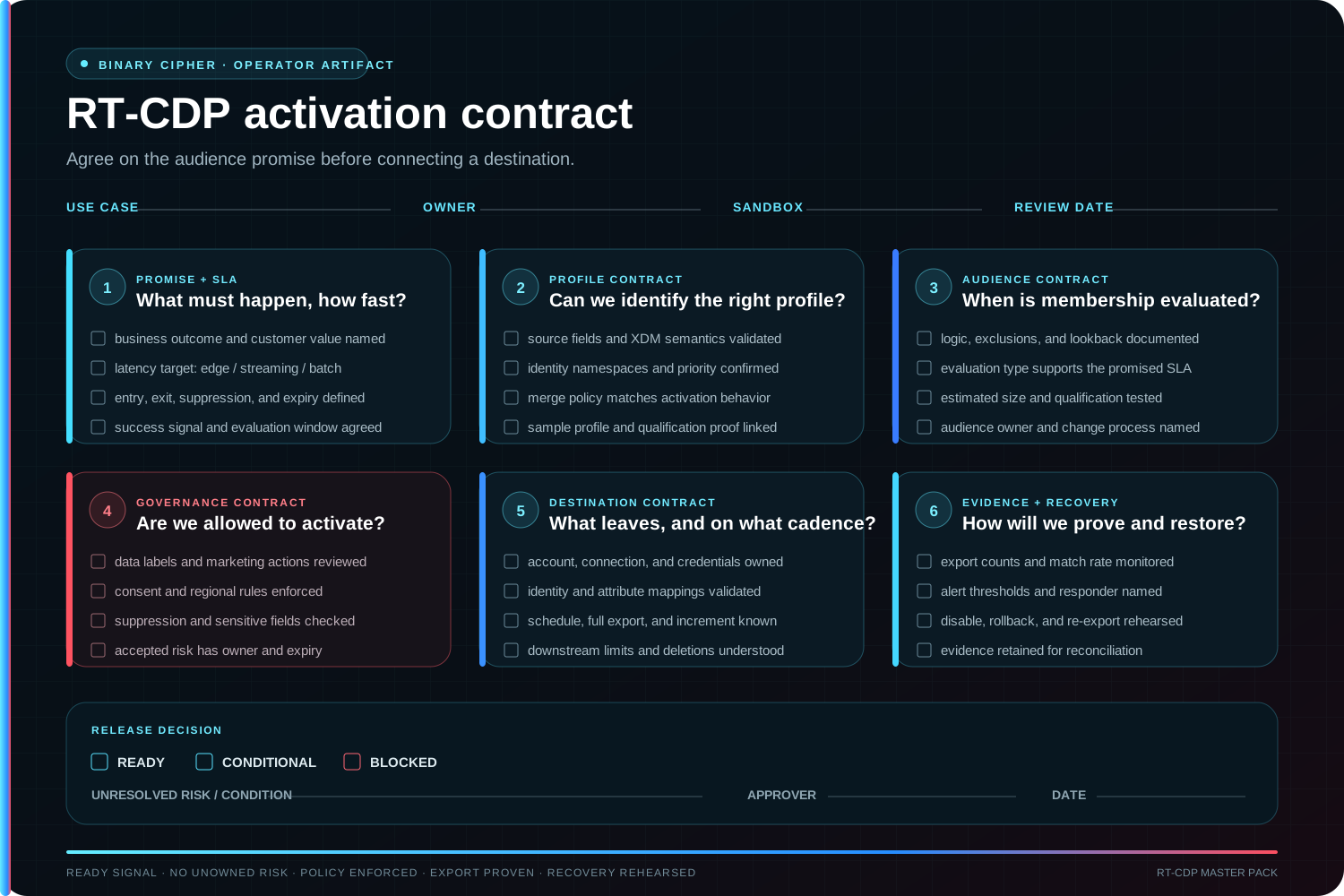
Use the one-page board to connect business decision, latency, identity, evaluation, governance, mapping, delivery evidence, and recovery ownership.
Download the boardThe pack teaches durable reasoning and points time-sensitive limits, interfaces, and service behavior back to maintained Adobe documentation.
Knowing the nouns is not enough. Operators must also know which neighboring service owns each decision.
The governed, merged profile representation assembled from enabled data and identity relationships.
The rule that determines which datasets and ordering logic are used when profile fragments conflict.
A reusable population defined or composed from profile attributes, events, relationships, or imported membership.
The cadence and runtime—batch, streaming, or edge—used to calculate audience membership.
A configured endpoint or integration that receives audiences, identities, attributes, or datasets from Experience Platform.
The intended data-use action evaluated against governance policies before activation.
The configured transfer of qualified audiences and selected data to a destination under mapping and schedule rules.
An observable execution record for data movement, including status, timing, volume, and errors.
Experience Platform supplies foundational services; Real-Time CDP is an entitled application and operating layer built on those services.
The graph decides which identities connect. The merge policy decides which profile fragments and attribute values win.
Streaming ingestion, streaming or edge qualification, and destination delivery each have independent timing and failure behavior.
Segment Builder, Audience Composition, Federated Audience Composition, Data Distiller, and imports create differently originated audiences with different eligibility.
Data-use policy, customer consent, Privacy Service requests, and access-control policy are related controls with separate owners and enforcement points.
The identity used to ingest and stitch a record is not automatically the identity a destination requires in its mapped payload.
Secure checkout and delivery are handled by the configured commerce provider.
Get the pack for $129Questions? support@binarycipher.devIt covers the complete durable operating model and the current documented capability families: profile and identity, audiences, governance, consent, destinations, activation, edge, composition, B2B/B2P, predictive capabilities, administration, APIs, monitoring, guardrails, and recovery. Tenant-specific and pre-release interfaces remain anchored to current Adobe documentation.
No. It is independent operator education. It supports implementation and certification reasoning, but Adobe controls product entitlements, exams, policies, names, and credentials.
Marketers, administrators, data engineers, developers, consultants, and architects who need one shared activation model rather than isolated role training.
The completed release includes a versioned offline HTML academy for Gumroad delivery and a maintained hosted edition with customer-specific access and stable “latest online” lesson links. The manifest, license, support path, privacy headers, and hosted renderer are included and validated.
One purchaser may use the pack for personal learning and their own internal or client implementation work, but may not share, resell, sublicense, or redistribute the pack or source assets. Email support covers delivery, access, corrections, and product defects; it does not include tenant implementation, consulting, or a response-time SLA. The reviewed terms are included in the package and will also be displayed before checkout opens.
The original purchaser may request a full refund within 14 calendar days of purchase by emailing support@binarycipher.dev from the purchase address and including the Gumroad order number. A timely, good-faith request that identifies the purchase is eligible; there is no minimum product-usage requirement. After refund, hosted access is revoked and the license to retained offline copies ends; delete those copies. Non-waivable consumer rights still apply.
Yes. Use the purchase link above to review the final terms and complete checkout.
Independent of Adobe. Adobe Experience Platform, Real-Time CDP, and related marks belong to Adobe.